

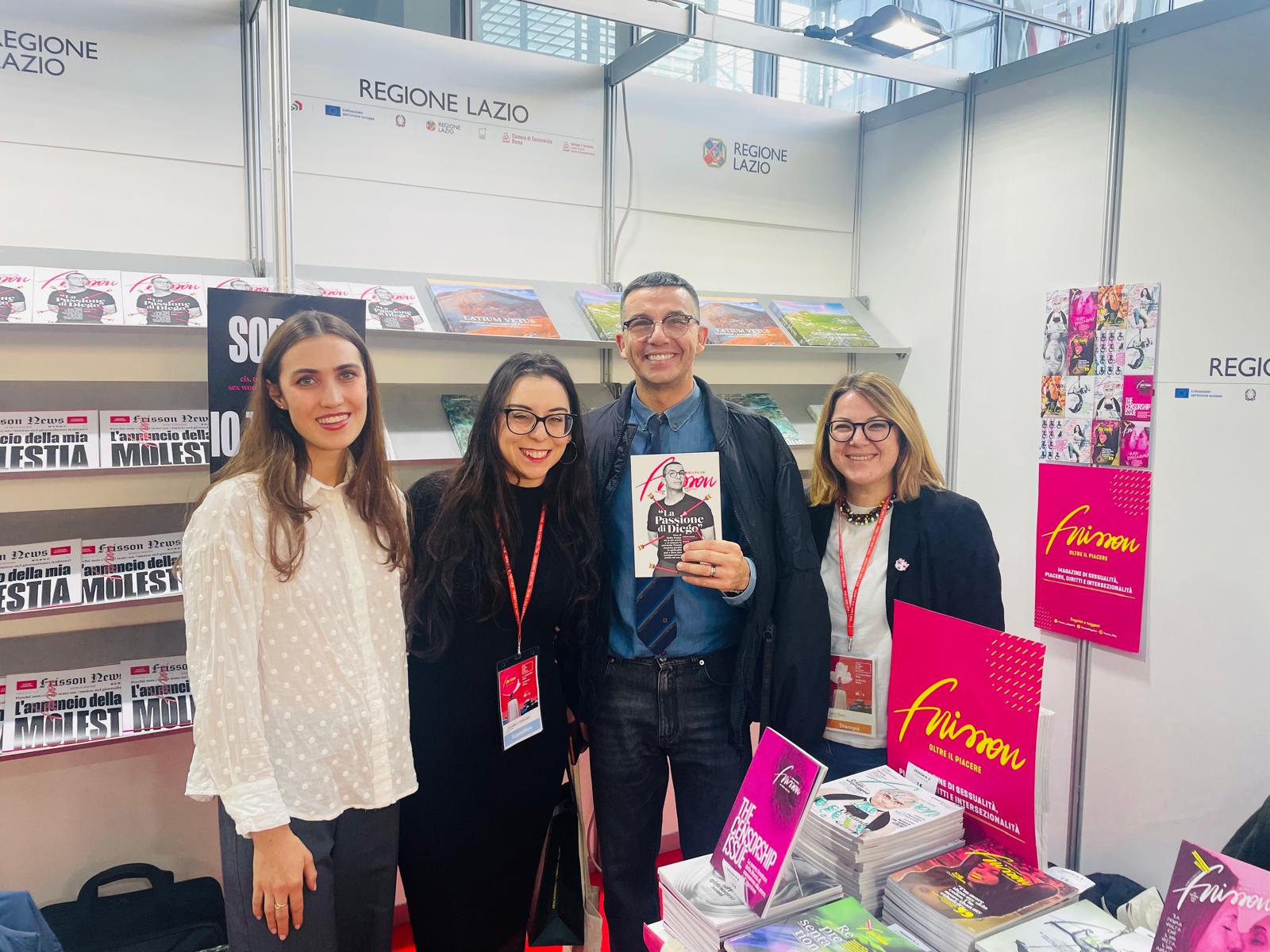
Cover photo by Francesca Ceccarelli: Frisson team at Più Libri Più Liberi 2024
Frisson is a crackling independent magazine born in 2019 from the mind of graphic designer Francesca Stella Ceccarelli. The goal is to break the patterns of the usual “feminine” magazines, talking about sexuality, pleasure, intersectionality, women’s and LGBTQIA+ rights. The magazine is colorful, pop, full of information, interesting articles and surveys, and the latest on #MeToo in Italian journalism.
The editorial team is composed of the founder and editor Francesca Ceccarelli, the editor-in-chief Angela Albanese Gennaro, and many contributors such as Francesco Rubeis Mazzenga, Claudia Ska, Melania Sestili Mieli, Cristina Notarnicola Cassese, Maria Francesca Marras Pinna and Maria Elena Memmola Tripaldi. Famous names on and off the web have contributed to the magazine, such as sexologist Fabrizio Quattrini, sex educator Giulia Zollino, and journalist and activist Iacopo Melio. The paper product is available online, in the networks of bookstores and independent shops such as sex shops.
How did the idea for the magazine come about?
My thesis project was when I graduated in graphics and photography at the Academy of Fine Arts in Rome. I was very fond of independent magazines, which are less prevalent in Italy than in the UK and Germany. I liked the way they talked about some topics that were not in line with the traditional press or some niches. At one point, I got so close to feminism and sex positivity. I thought proposing a themed product was interesting and original, and I started with the first research between 2016 and 2017. Initially, it was an individual project, with the hope that once finished, the thesis could also find a real space outside. When I was producing the number zero, I started making contacts that would enter the Frisson editorial staff.
Do you already have a way to take it into account?
It was supposed to be an alternative to highly standardized women’s magazines. Still, already in the second issue, when we dealt with the transgender issue, there was a rapid evolution and, besides women, it was addressed to the LGBTQIA+ community. New people and sensibilities enriched the following issues and became more challenging.
How did you meet the manager and the other employees?
One of the first people who have been part of the magazine since the thesis is the blogger and writer Claudia Ska, whom I met while talking about books at a publishing fair. The editor-in-chief, Angela Albanese Gennaro, has taken over in the second issue to formalize us as a newspaper. It is a vital enrichment, providing considerable training for gender and migrants’ issues, current affairs, and politics. The other people came by hand with applications to become collaborators or by word of mouth.
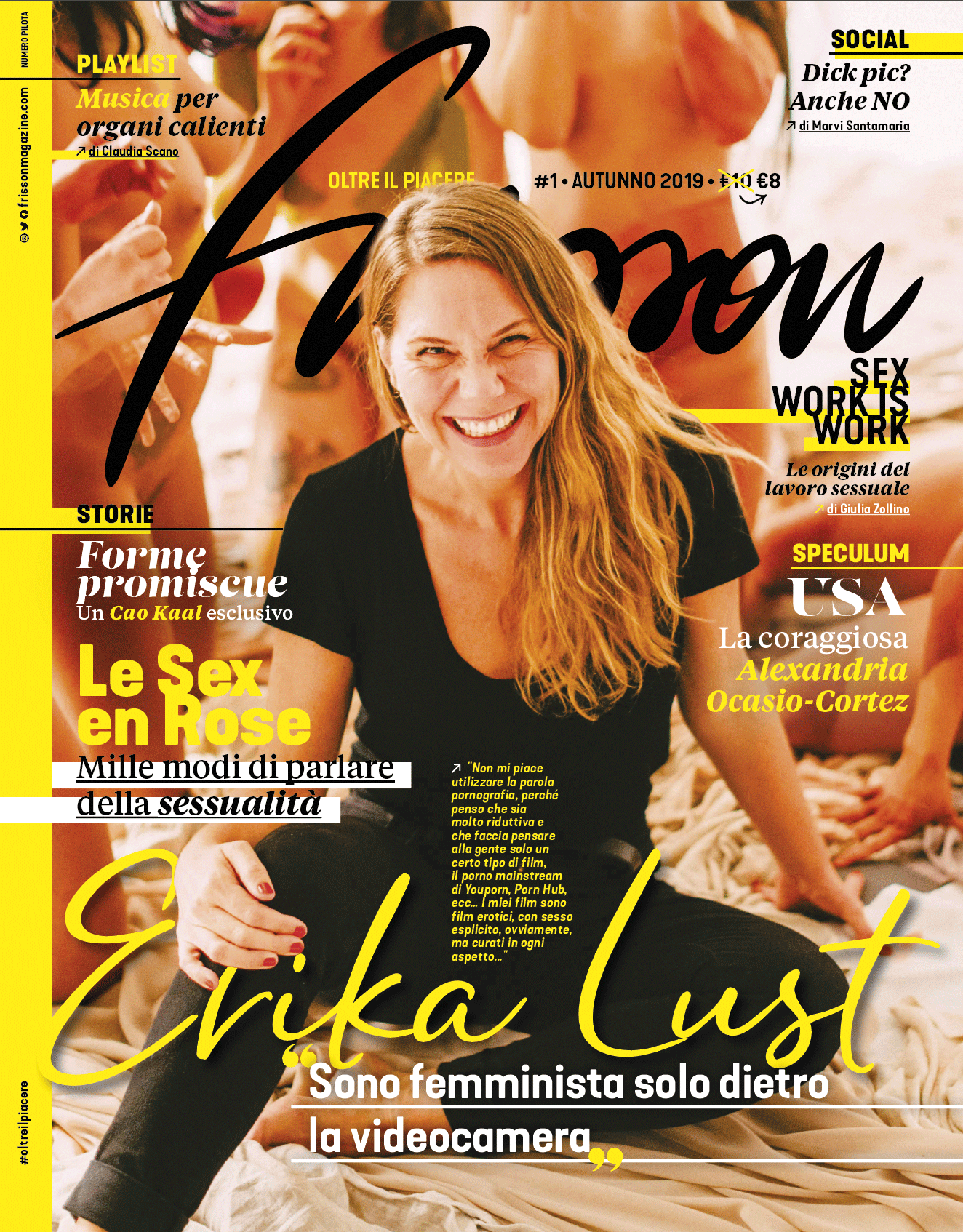
The first Frisson issue with director Erika Lust on the cover
Did the name come up automatically or was there some research behind it?
I did some research. I wanted an evocative name, not necessarily Italian, hence the choice of the French language. Frisson means ‘thrill of pleasure’, understood as ‘skin orgasm’, a tactile goosebumps. The explanation of the term is given by the subtitle that applies as a motto: ‘Beyond pleasure’. Remember that we are talking about not only sexuality but also politics, current affairs, rights, and many other topics.
What were the most beautiful experiences you had thanks to Frisson?
Cultivating a relationship with the readers is very important because you write emails and messages on social media. It is a direct and intimate thread that only the independent reality can offer you. It’s nice to know that you’ve changed someone’s perception, given them a cue to reflect, and lit a spark. The relationship with the community of readers and people who share our line of thought is consolidated with the events we organize to release new issues, and we try to get out of the social bubble.
The speaker and author Diego Passoni, protagonist of the cover of Frisson 12 a Più Libri Più Liberi 2024, photo: Francesca Ceccarelli
How do you print an independent magazine?
I have learned from independent editors who share their information in certain places. Some editors publish helpful free online guides that must be adapted to our market, clearly different from the foreign one, where magazine shops are more recognized and frequented. In preparing a number, we set up several meetings to identify the theme and decide which strands to tackle. Once the articles have arrived, a digital page layout is formed that can be edited at any time and then taken to typography. The following steps are promotion, point-of-sale distribution and planning of presentation events.

An article on nymphomania by Claudia Ska in Frisson 10
What are the significant problems facing an independent magazine on sexuality?
The easiest phase is production because we have a reasonably free editorial line and can discuss what we want. Promotion is difficult because we do not use traditional distribution channels like newsstand distribution as independents. Our primary channel is e-commerce, which is totally self-managed, followed by bookstores and independent shops. The problem is that the social platforms we use to promote ourselves are not friendly. Since 2020, we have had an Instagram ban, a permanent block that can not be removed. We can’t do so much advertising on paper because, on the one hand, it is considered unattractive, and on the other, companies could ask for control over our content.
What is the next issue and when will it be published?
We will come back to talk more about sexuality. The next issue will be released around the beginning of June, and we will organize presentations around Italy.
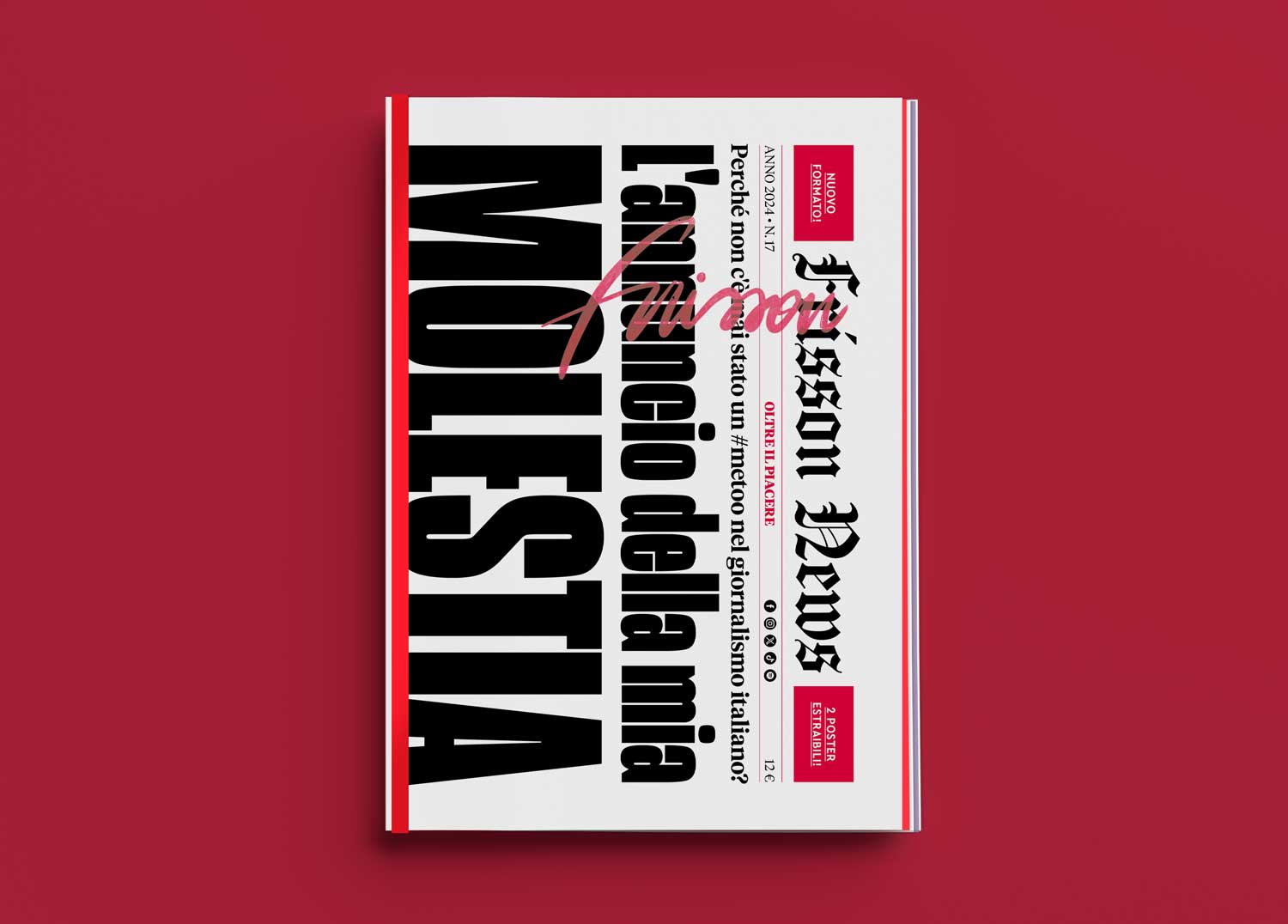
The new Frisson format in the latest magazine issue
 Fiore Avvelenato
One Reply to “”